Which feed is best for my horse?
Read more

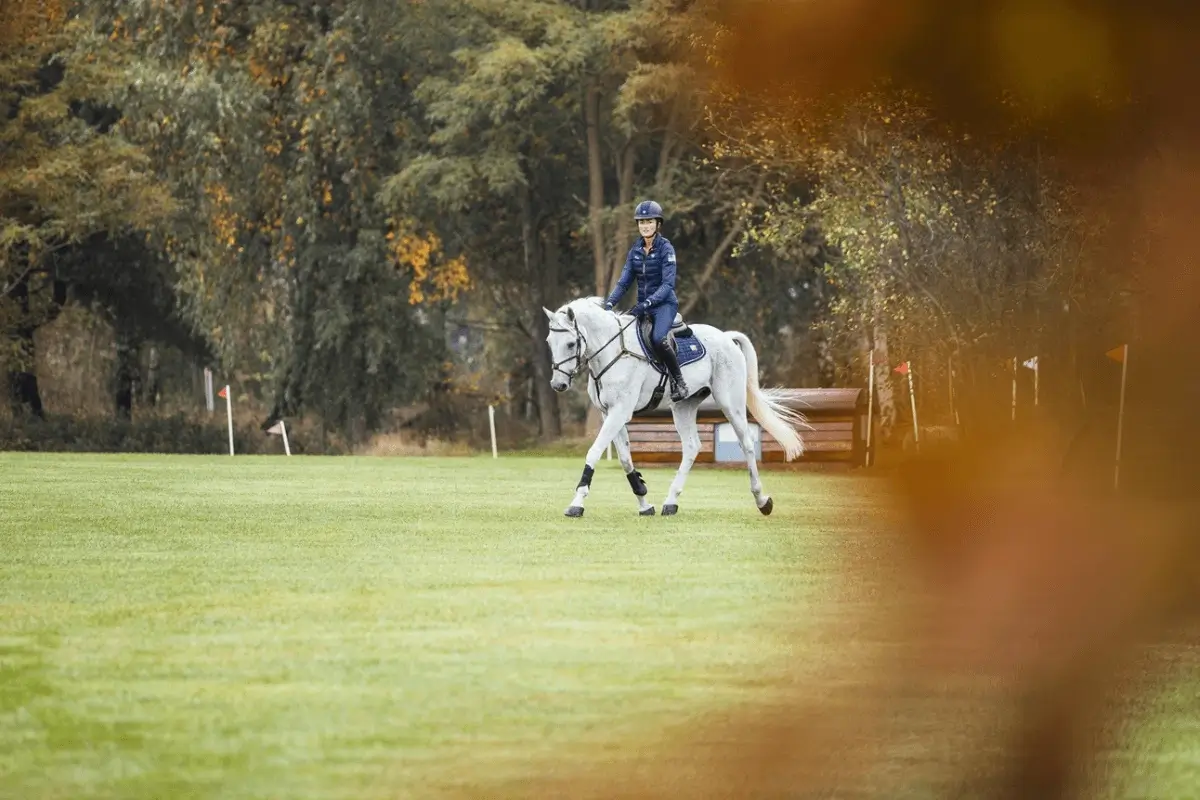
A successful competition season starts 6–8 weeks before the first event. Balance workload and capacity, prioritise recovery and tailor nutrition to your horse’s discipline. Exercise physiologist Carolien Munster and nutrition specialist Peter Bollen share the keys to peak performance without injury.
As spring arrives, the outdoor season begins. Peak performance doesn’t start at the first competition — the foundation is laid weeks, often months, in advance. Exercise physiologist Carolien Munster and nutrition specialist Peter Bollen have researched how sport horses can perform at their best without injury risk. Their insights on training, nutrition and recovery form the backbone of this article.
A sport horse is a true athlete. Training is designed to strengthen muscles, bones, tendons and ligaments so the horse can better handle physical demands. The key lies in the relationship between training load (what you ask of your horse) and capacity (what the body can handle).
As long as these two are in balance, the body adapts and grows stronger. When the load exceeds capacity — especially with sudden peak efforts — the risk of injury increases.
That’s why: measurement is key. Tools such as heart rate monitors or systems like IE-Potential help objectively evaluate training and detect overload in time.
A horse doesn’t improve during training, but after it. Following exercise, fitness temporarily drops. It’s during the recovery period that the body rebuilds stronger — a process known as supercompensation.
In practice, this means:
Good recovery isn’t a luxury — it’s an essential part of any sport horse training programme.
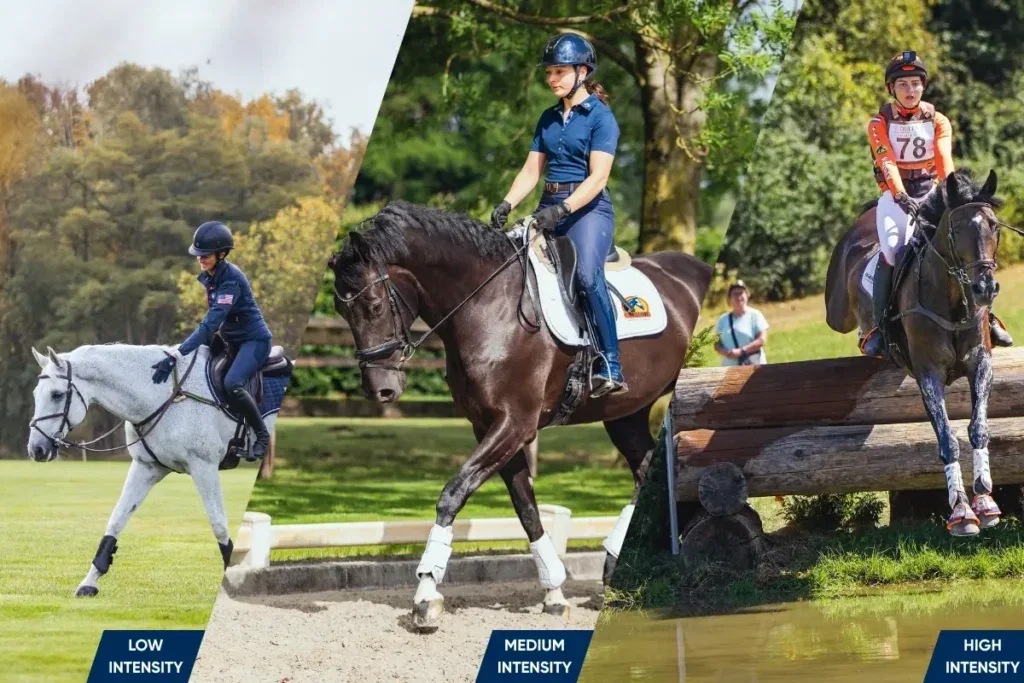
Not every sport horse has the same energy requirements. The right nutrition depends on the discipline and training phase.
| Discipline | Energy source | Nutritional focus |
| Jumping, racing | Sugars & starch | Fast energy, explosiveness |
| Dressage, eventing | Fats & fibers | Endurance, stability |
| Long training sessions | Combination | Glycogen replenishment + fat metabolism |
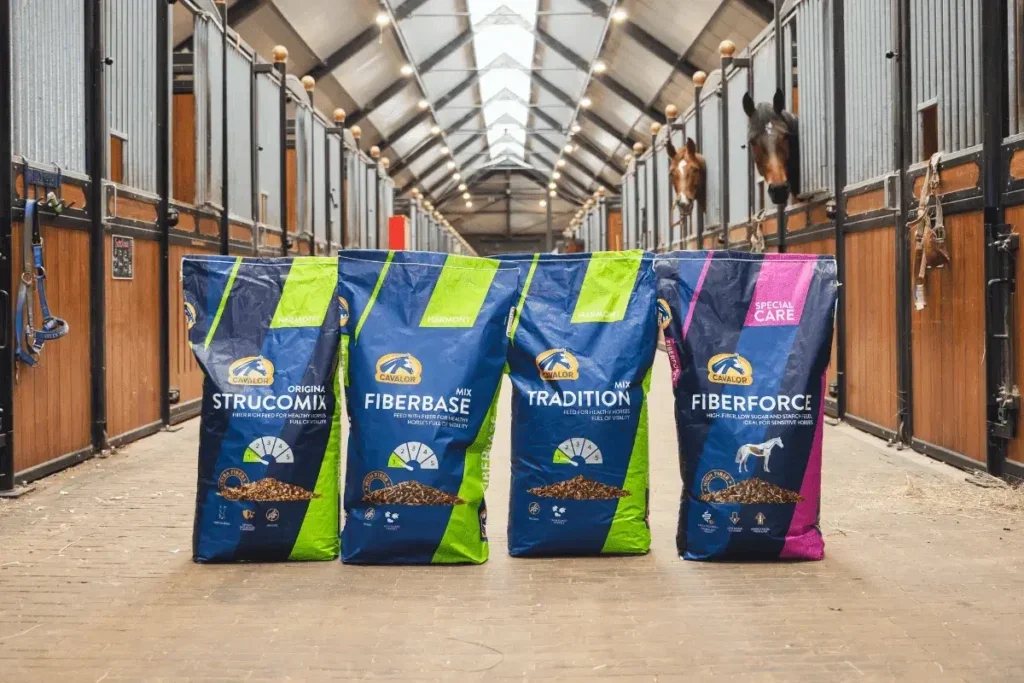
A balanced ration always forms the foundation. Unsure about your horse’s diet? At mycavalor.com you can easily analyse your horse’s weight, condition and needs, and request personalised nutrition advice.
Recovery is often the most underestimated factor in a training programme. Remember the 3 R’s of muscle recovery in horses:
Within 30 to 90 minutes after exercise, the body is most receptive to nutrients — the so-called anabolic window.
6–8 weeks before: Begin a gradual fitness build-up. Muscles and metabolism need time to adapt. Don’t rush this process — sudden peak loads are the fastest route to injury.
During the season:
Want to support your horse towards peak moments? Choose a thoughtful approach with supplements such as Cavalor Muscle Force, Pow’Red Performance and Peak Performance. They help your horse build strength and perform at their best when it matters most.
🔗 Read also: https://cavalor.com/articles/sport-and-recovery/
A successful competition season starts with a considered approach. By monitoring training objectively, aligning nutrition with workload and making recovery central, you give your horse the best chance of peak performance — without unnecessary risk. It’s not about training more, but training smarter.
How far in advance should I start building up for the competition season?
Ideally start 6 to 8 weeks before the first competition with a gradual build-up. Muscles, tendons and metabolism all need time to adapt to higher demands.
What are electrolytes and why are they important for sport horses?
Electrolytes are mineral salts (such as sodium, potassium and magnesium) lost through sweat. They are essential for fluid balance, muscle function and nerve conduction. They must be replenished after intensive exercise.
How do I know if my horse is recovering sufficiently between training sessions?
Watch for changes in behaviour, appetite, muscle tension and resting heart rate. Objective tools such as heart rate monitors or systems like IE-Potential help detect overload early.
What nutrition do I give a showjumper versus a dressage horse?
Showjumpers need more energy from sugars and starch for explosiveness. Dressage horses perform better on energy from fats and fibre for sustained, controlled effort.
When should I give my horse a recovery supplement?
The best time is within 30 to 90 minutes after exercise — this is the anabolic window during which the body is most receptive to nutrients.